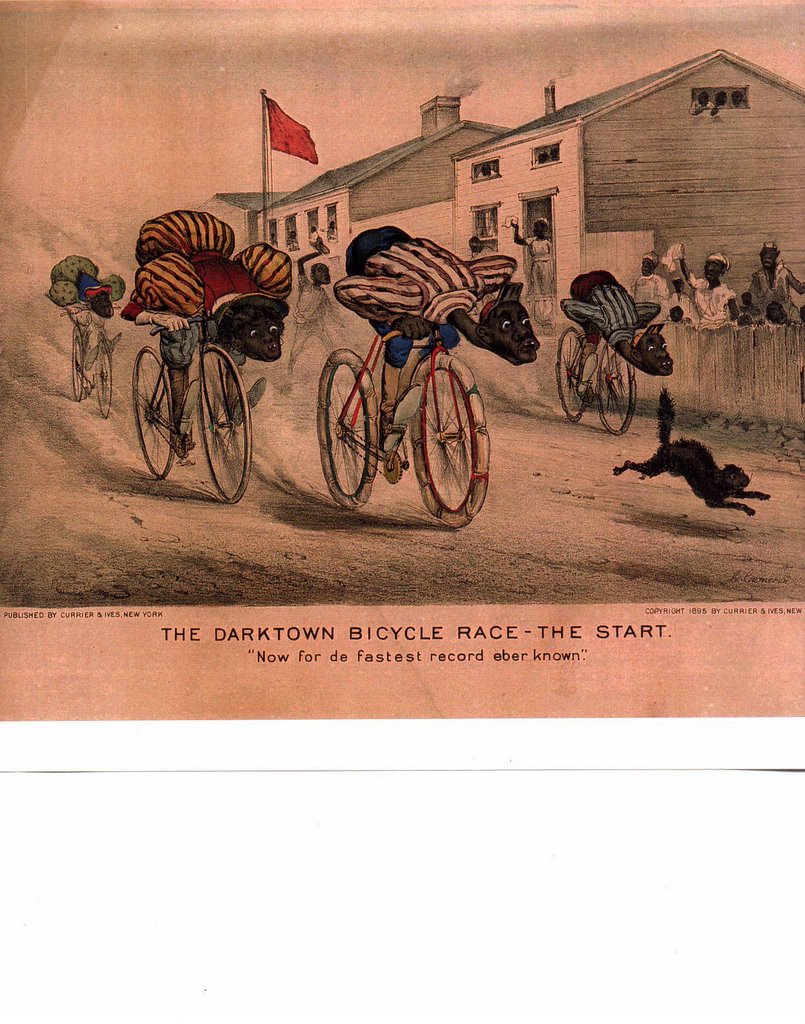
Contrary to local belief, Cutters' existence has more to do with enjoying the ride than in cutting hapless riders at high speed.
(Although... dat feel sweet too...)
(Click on the image to see the words.)
 Van Damme Van Damme | More options | Sep 1 (1 day ago) | ||
 Once again, Sean's design skills have come to the rescue in the design of our new magnetic sign that has the club logo and the words"Cyclists Training," for use by our security vehicle.
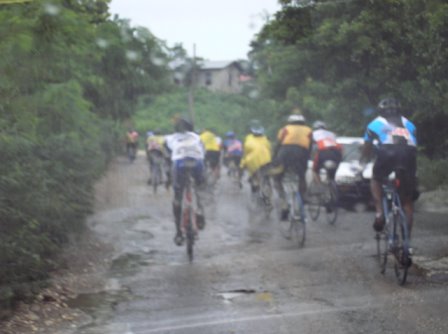
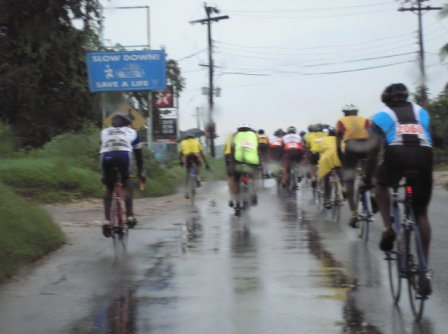
 It was the 16 Oct. 2004 ... Heroes Day.. when we cyclists annually wage war on the roads from
We departed from the intersection of
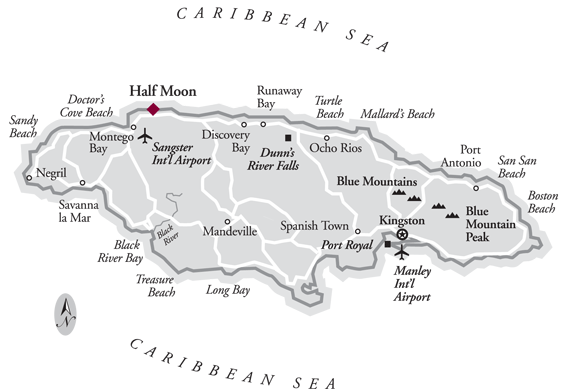
I had heard the stories many times, how the hills turn into mountains that never stop coming, attacking you, especially the notorious Melrose Hill... how treacherous the climb is into Mandeville with the sun constantly beating down on you, but now this is my reality... the water now has the temperature of a hotcup of tea, my heart rate has reached limits where I have never seen it before, forced to slow to bring it down or risk a cardiac arrest... choices choices... but finally the climb into Mandeville (58 miles-9:14am) is over and we stop and get watered up & fed ourselves, only to catch a breath before heading out.
No sooner had we begin departed Mandeville than the road did damage to two members of the groups tyres. Quickly we repaired them before continuing our journey. The approach to Spur Tree has many undulating hills that take its toll on the finest of riders, but finally we begin the decent of Spur Tree. First we relax a bit and coast into the decent but quickly the speeds increase from a mere 26mph to 35mph.
Then some of us decide to attack it we slip into our highest gear apply additional pressure to cranks on a straight away. I glimps at my clock 52mph. With a hair pin bend approaching I carefully squeeze my brakes and lean hard into the turn.
With temps as if to bend the the cranks I power out of the corner. The heavy vehicles have left the road surface fairly uneven on this seven mile hill so at such speeds the bumps put a serious beating on elbows and wrists. Finally the descent is over as we welcome the plains of Vere as we roll into Santa Cruz with the sun beating down on us with little or no clouds in the sky. We ride through Holland Bamboo wishing that Ivan had not thinned the once thick lush Bamboo Avenue which would have guaranteed us much well needed miles of shade.
No stopping for shrimp as the paced picked up passing Middle Quarters, the sweltering midday sun continued to play havoc as we countered it with quarts and quarts of water and gatorade as we tried to replenish the lost nutrients from our very tired bodies.
The next scheduled stop was to be the UniPet station at Luana but two miles before we made a unanimous descision to stop and refuel with liquids from our support vehicle travelling behind us. Next stop lunch 11:30am Luana , rest, stretch and repairs pushed of at
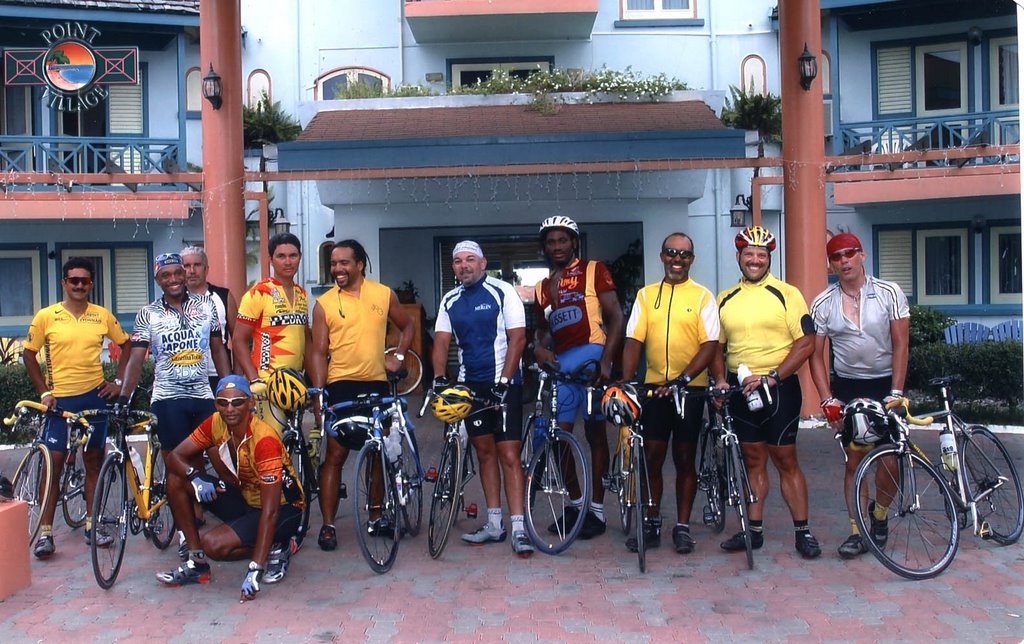
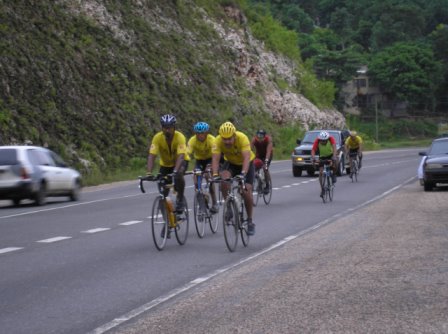
(Sean is in the middle in yellow jersey.)
 Hello all,
 These rides are supplemental to the usual Tuesday/Thursday rides, and the occasional Wed ride.
 From an article in the Jamaica Daily Gleaner earlier this year: Road Fatalities Increase.
STEADY INCREASE
Additionally, SSP Powell noted that there has been an increase in the number of pedal cyclist deaths. The figure for this year has doubled so far, as 16 cyclists have been killed compared to eight for the same period last year.
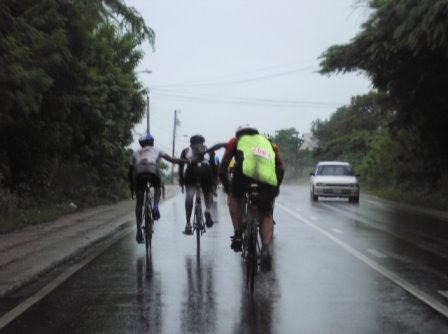
This is no joke business, as all Cutters know the feeling of almost being clipped by an insane taxi-man or overbearing 18 wheel truck. Some of us have had even more direct encounters.
Of course, there was no security vehicle (a.k.a. "sag wagon") behind us to protect us from the crazies in the road.
 Breakfast
The meal before a ride should be low in fat and with no big lumps of protein. Both will tie up body resources in digestion, resources which are really needed for powering your legs. Also, cut down on fiber, which will absorb water and sit in your stomach. This is the only time where you don't want fiber in your system.
Eggs are a terrible choice, and milk is a poor beverage. Pasta or pancakes are great pre-ride meals, while whole-grain cereal with milk is much less so.
Try to pick a food with a low glycemic index, such as pasta, grains like all-bran and oatmeal, or maybe rice and sweet potatoes. These will release their energy over the duration of a long ride, rather than twenty minutes after the meal. Avoid such cereals as corn flakes and cheerios, white breads, and sugars. Check out our article explaining the mysteries of the glycemic index.
You are seriously hindering yourself by drinking a heavily sugared drink minutes before an event. Within five to seven minutes, the sugar enters your bloodstream, increasing glucose concentrations beyond what your body will tolerate. Your body's response it to dump insulin into your blood, to neutralise the sugar.
This would be fine if the glucose was all stored as glycogen in only the quadriceps, but the blood is drained of energy to stock up the arms and back with non-transferrable glycogen. Meanwhile, your blood sugar is lower than before, and the insulin interferes with using fat for energy.
Not a pretty picture.
Don't eat anything within an hour of the ride. If you leave less time, you will sabotage your blood sugar with an insulin reaction. An hour leaves enough time for insulin and glucose levels to return to normal, but leave more for solid foods and even more for hard-to-digest proteins and fats.
Don't eat anything for the first half hour of the ride. Despite PowerBar Inc.'s marketing, you are not doing yourself any favours.
On the other hand, eating during the ride is critical for endurance -- otherwise you'll bonk after about two hours. The sugars are used directly by your muscles, sparing their precious stores of glycogen.
I'd advise against it. "Carbo loading" does not mean eating a big pasta dinner the night before. Rather, it is a program which attempt to temporarily increase the muscles' appetite for stored glucose by completely draining them a week before the big race, teasing them for a few days with a low-carb diet, and spending the last couple of days pouring on the pasta.
Carbohydrate loading doesn't always make you ride faster, and it is easy to screw up. Further, there are negative side effects, such as overall tightness, bloody urine, and cardiac abnormalities which could lead to a heart attack.
To prevent bonking, where you deplete your body's glucose reserves (stored as glycogen in the liver and muscles), you must consume at least 250 calories per hour of brisk riding, with some before and a few times that after your ride. Eat more at high altitude or if riding hard, as both increase caloric requirements dramatically. Eat regularly to avoid the brutal swings in your blood sugar.
Some stick to conventional foods, such as bananas, and merely keep an energy bar or two stashed for emergencies, which is partly psychological in giving you the energy you need to not eat it.
In the commercial snacks section is a nutritional comparison of Fig Newtons, PowerBars, Nutri-Grain bars, and a recipe for energy bars.
Especially in digestion-disrupting summer heat, plain crackers and white bread can help to settle an upset stomach.
Fig newtons are great, as they are small and light, but have 11 grams of carbohydrates and about 50 calories each. They are also a great source of sodium and potassium, to replace the electrolytes depleted through sweat. As newtons only have about a gram of fat and 0.4 grams of protein per cookie, it is good to combine them with commercial sport foods and gels, or the energy bar recipes which are high in fat and protein.
 There is no more effective way to become a motivated cyclist than finding a good regular group ride. Here are some group riding techniques common around the world.
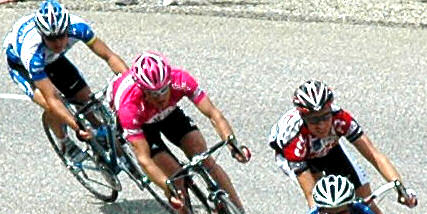 Descending ability, like any other skill, is best improved with practice. The more time you can spend on technical descents the more confidence and speed you will be able to develop. A few local hot shots I know practice on their motorcycles before races with strategic descents. While frequent group rides are the best way to develop real bike handling skills descending with others will not necessarily help you descend faster alone.
Reducing tire pressure will both improve traction (to a point!) and reduce your speed, making cornering easier. Motorcycles, for example, operate with very low tire pressures because the motor can soak up the inefficiency much more readily than a rider can. Road riders generally want to inflate their tires to near the labelled maximum, usually 120 to 170 PSI, and will not want to throw away the speed that provides that except for unusual situations.
When traction is paramount, using about half that pressure -- so there is a noticeable bulge when riding -- will help at the expense of significantly higher rolling resistance. With less pressure, the patch where the tires mee the road surface will be significantly larger. However, the wasted energy of rolling resistance will get soaked right into the tires, increasing tire pressure, and temperature, which can be critical enough after half an hour of steady braking on a mountain downhill for the glue holding sew-up tires to your rims.
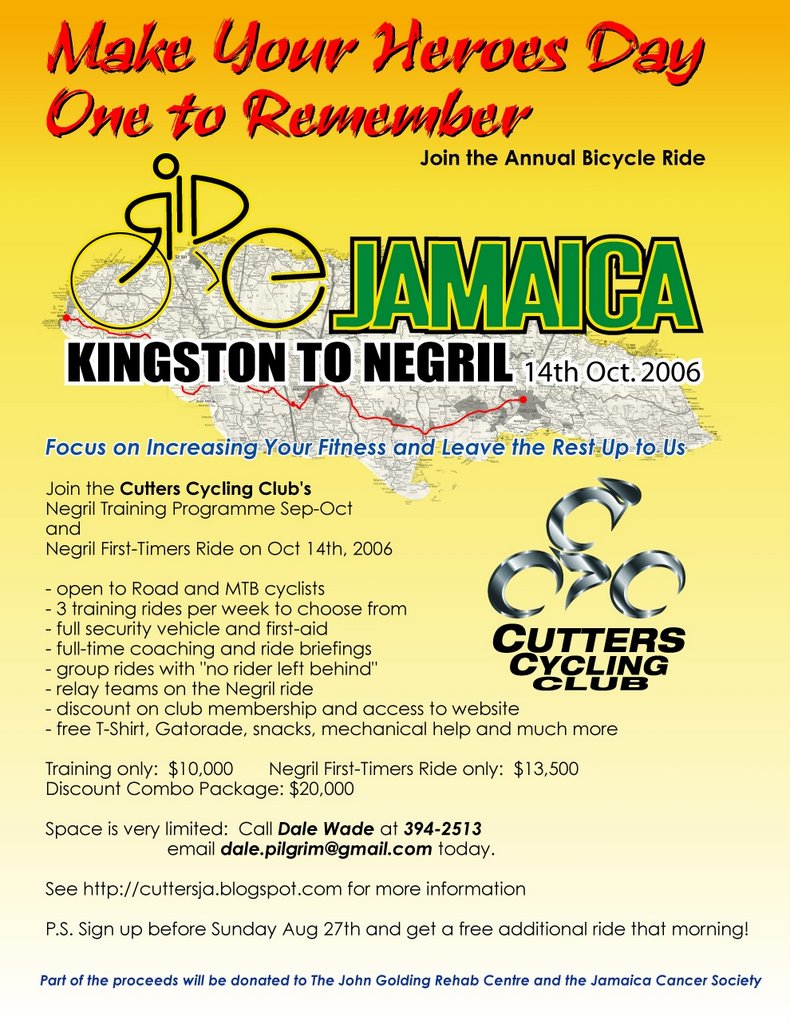
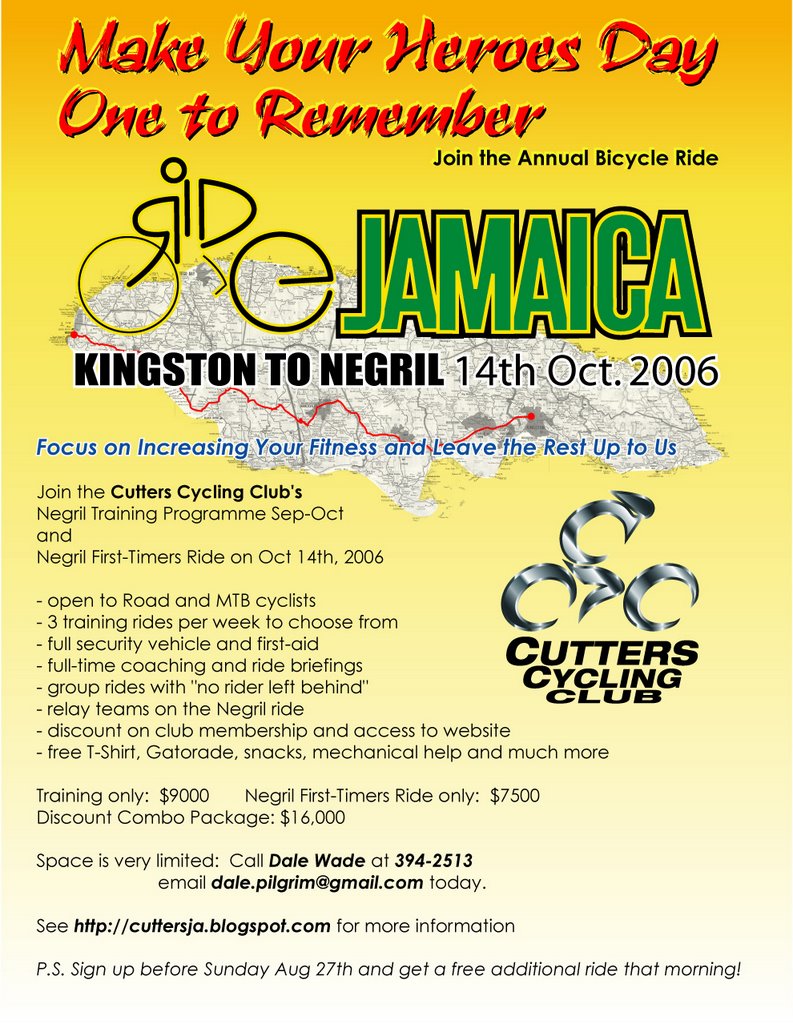
 OK, you have either successfully completed the Cutter's Negril Training Programme, or you are already a fit cyclist. If you are not fully fit, then you can join the programme as a relay participant and have the distinction of completing this signature ride.